Every scene, response and ending is here. In the interactive story, your choices select the responses and the ending.
Opening
The map costs the same as a bag of roasted chestnuts. You buy it because the paper feels good between your fingers. Then a gold line moves beneath your thumb.
You are Isla, twenty-nine, a costume maker who has spent months planning a trip to Seaglass Bay. The map shows a small theatre by the sea, with a coat like one you have sewn hanging beside its door. Another line points towards the northern hills.
The seller notices you staring. “Possible roads,” she says. “Not instructions. It can't open a closed road, tell you what someone feels, or promise who will stay. At sunrise, the glow goes. The ordinary ink remains.”
Beside you, a man lowers a paper cup. “That seems important to read before the attractive part.”
He introduces himself as Finn, thirty-two, a traveller with a backpack and an unsuccessful attempt to repair its strap. You have a needle in your coat pocket. While you mend the strap, he asks which of the two ways out of the market you would choose without the map.
Scene 1
The first fork
Lanterns hang over the market's north gate. Beyond it, steps climb towards an old observatory. The gold line points that way, then curves down to the river bridge.
A second exit leads along the water. You can hear a musician trying to persuade an audience to sing a chorus they do not know. That route reaches the same bridge, provided the riverside path is open. You can see people walking on it now.
Finn folds the repaired strap over his shoulder. “I'm happy to walk,” he says. “But I'd like the person holding the map to have an opinion.”
You realise how quickly a glowing line has begun to feel like permission you were waiting for.
Which way do you take?
Option A: Try the glowing route up to the observatory.
A view, not a verdict
You climb the steps together, stopping halfway because the climb is less romantic than it looked from the market. Finn offers a drink, then admits he needed the break first.
From the observatory terrace, the town is a scattering of warm windows. The gold line on the map is beautiful. It has not made either of you more certain about next week.
You tell him the view was worth choosing, but that choosing it does not require obeying the next arrow. He grins. “Good. I'd hate to discover we'd outsourced the entire evening.”
Option B: Take the riverside detour because you want to hear the music.
A road without an arrow
You fold the map so the glowing line is out of sight. At the riverside stall, the musician asks whether either of you knows the chorus. You do not, but Finn invents three confident wrong words and earns an appreciative laugh.
For ten minutes, you listen. Nothing supernatural happens. When you open the map again, the original road is still there. It has not punished you for being somewhere else.
You are pleased to discover that a possible future can wait while you enjoy a real song. Finn buys chestnuts to share before you continue towards the bridge.
Scene 2
The places you do not mention
At the river bridge, the map catches light from a lantern and briefly shows the little seaside theatre again. You had found its workshop notice weeks ago and kept the booking page open on your phone. The map has not invented the possibility. It has made it harder to pretend you never wanted it.
Finn points towards the northern road. He plans to walk to a valley where a friend runs a small hostel. He has promised to help repair its roof before winter.
You could spend the rest of the night enjoying the idea that two people walking together must be heading to the same place. Or you could let the actual destinations into the conversation.
What carries forward from choice 1
After option A: From the observatory you saw several roads at once. The view was useful because it widened the choice, not because it made one road compulsory.
After option B: The song beside the river happened only because you took a detour. Finn has seen that your curiosity has a direction of its own, even without a glowing arrow.
How much of your own direction do you share?
Option A: Tell him about Seaglass Bay and the trip you keep postponing.
A place said aloud
You describe the theatre workshop, the cheap room above a bakery, and the swimming lessons you have wanted to try despite being a little afraid of deep water.
Finn listens without turning the bay into a place you should visit for him. He asks when the workshop begins. You show him the notice. The dates are real; your reluctance to book them has been real too.
“I could travel part of that way,” he says. “If we wanted that. Not because a line on a map looks pleased with itself.”
Option B: Ask about his northern road before deciding what you want to share.
Listening without disappearing
Finn tells you about the hostel, the friend waiting there, and the roof he has been promising to help with. It sounds ordinary and important. You like that his journey contains a person who expects him, not just a beautiful direction.
When he asks about your plans, you tell him that you are considering time away from the costume shop. You are not ready to describe every part of it yet.
He accepts the incomplete answer. You notice that listening to his future does not require making yours smaller, even while you are still finding the words for it.
Scene 3
Before the lanterns go out
The market begins packing away. You help a seller gather fallen paper cups, then walk with Finn to the square where the coast road and the north road separate.
The map still glows, but more faintly now. Sunrise is close enough to pale the roofs. Its ordinary ink shows both roads clearly; neither has become a command.
Finn asks whether you would like company beyond this evening. “I can offer a journey,” he says. “I can't offer the paper's version of a life we haven't lived.”
You are glad he has not confused a possible road with a promise. The next answer needs to come from you, and it needs to leave room for his answer too.
What carries forward from choice 2
After option A: You have told Finn the name and dates of the place you want to reach. Any shared journey must now make room for that real destination.
After option B: You know where Finn has promised to go, and you have begun speaking about your own time away. There is still room to decide what you want to share, without treating hesitation as a debt.
How do you arrange the next part?
Option A: Invite him to choose a first stretch together, then discuss the rest.
A journey with an end you can name
You suggest walking as far as the morning station, then comparing the practical options. You could share part of a road without pretending that the rest has already been decided.
At the timetable, you discuss money, dates, and the people each of you has promised to see. The details make the offer less dreamlike and more inviting. You ask what he wants, then listen when the answer contains a destination different from yours.
The map lies folded beside you. For once, nobody asks it to settle the conversation.
Option B: Make your own plan and ask what he can freely promise.
An answer written without magic
You take out your phone and look at the journey you were considering before the market. Then you tell Finn what you intend to do, without offering to change it before he has even answered.
He does the same. You discuss whether contact, a meeting, or a warm goodbye would fit the lives you have actually described. Neither person has to make an impressive promise to prove the night mattered.
The gold line fades a little more while you speak. It has shown you possibilities. Choosing one does not require asking the paper's permission.
Where the choices lead
A is the first option; B is the second. Read the letters from choice 1 to choice 3.
Ending
A Road Chosen Twice
You choose a short journey to Seaglass Bay together. Finn checks with his friend before changing his arrival date; the roof work can wait a week, and he makes a new promise he can keep. You book the workshop because you want it, not because bringing someone makes it less frightening.
At sunrise, the map's gold line disappears. No road closes. No person vanishes. You fold the ordinary paper and put it in your bag with the tickets you bought yourselves.
The week is not a perfect sequence of meaningful views. You miss one bus, disagree about lunch, and discover that Finn packs his bag as though every object has personally offended him. You also learn that he listens when you say you want an afternoon alone at the workshop.
One morning, you take your first swimming lesson. Finn waits at the cafe because you asked him to, rather than watching from the beach as if encouragement required an audience. Afterwards, you tell him about the deep end while he tries to repair another strap.
At the end of the week, his northern journey is still waiting. You decide what contact you want before he leaves. The future remains larger than the part you have shared.
The map did not promise this road, and the road did not promise forever. Two people chose it with enough truth to enjoy being there. You keep the paper for its beautiful ink, and the memory for the choices you made beside it.
Ending
Two Tickets, One Date
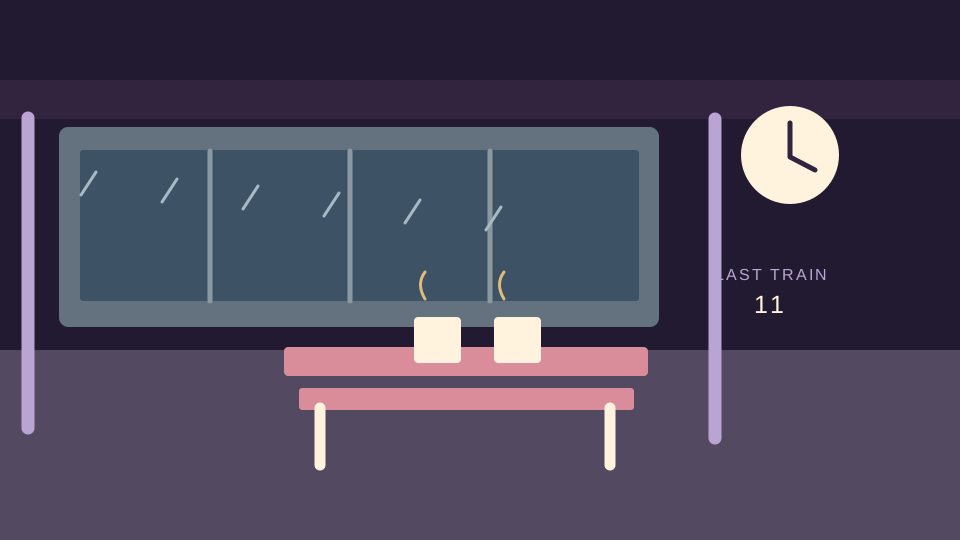
At the station, you decide to travel in different directions for now. Your coast is not Finn's valley, and an enjoyable night does not require either place to become less important.
Before separating, you make a particular plan: the station cafe in three Saturdays, eleven in the morning. You check the dates, exchange numbers, and agree to say early if the plan needs changing. It is a meeting, not a promise to feel exactly the same by then.
The map loses its glow while you buy your tickets. You notice that the paper remains pleasant to hold. It has become an ordinary object without becoming a useless one.
In Seaglass Bay, you attend the workshop and finally take the swimming lesson you have been considering for months. Finn sends a photograph of a repaired section of roof. You send one of a costume sleeve that refuses to sit properly. The messages are small enough to belong to real days rather than to a story you must keep performing.
Three Saturdays later, you reach the cafe at ten fifty-eight. Finn is already there, reading the menu with the seriousness of a traveller who has missed breakfast. You sit down and ask about the valley.
There is no glowing line between your chairs. There does not need to be. You have both arrived by keeping a plan you were free to change. Whatever happens after coffee will be another decision, made with a little more knowledge of the person across the table.
Ending
The Direction That Is Yours
You thank Finn for the walk and tell him you want the next journey to be your own. He says he understands. His northern road is still waiting, and he does not offer to abandon it to turn your answer into another question.
You sit together until the first bus arrives. There is affection in the silence, and the sadness of something that could have happened. Neither feeling requires you to choose it now.
At sunrise, the map stops glowing exactly as the seller said it would. You can still read the roads. You can also fold the paper and look at the street in front of you. The ordinary version of the world has not become less full of choices.
On the coast bus, you book the theatre workshop. You send a message to the costume shop confirming when you will return. These are small actions, but they belong to a future you are no longer waiting for somebody else to approve.
At Seaglass Bay, the water is colder than you expected. You take the swimming lesson anyway. Afterwards you buy chestnuts from a stall and remember a traveller who let you choose your own road.
It was a good night. It does not need to become the beginning of a romance in order to remain one. You keep the map tucked inside your notebook, where it marks a page rather than a destiny. Then you turn towards the town, carrying your own name for the place you want to go.